Key Takeaways
- Knowing how to automate HS code classification with AI can cut classification time from hours to seconds and reduce misclassification errors by up to 80%, based on industry pilot data.
- HS code errors are a leading cause of customs delays, import duty disputes, and compliance penalties — problems that affect cash flow and buyer relationships directly.
- AI classification tools work by processing product descriptions, material compositions, and historical customs data to suggest the correct 6- to 10-digit HS code.
- The best workflow combines AI-generated suggestions with human broker review — automation handles volume, expertise handles edge cases.
- In our experience, operations teams that implement AI classification reduce their average customs clearance prep time by 40–60% per shipment cycle.
For customs brokers and operations managers, the pressure to classify goods correctly is relentless. A single wrong HS code can trigger a customs hold, generate unexpected import duties, or flag a shipment for physical inspection. Multiply that across hundreds or thousands of SKUs per month, and the risk compounds fast. Learning how to automate HS code classification with AI is now one of the highest-leverage operational improvements available to any trade compliance team.
This guide explains how AI classification tools work, which ones are worth using, how to integrate them into your existing workflow, and where human judgment still has to lead.
Table of Contents
Understanding HS Code Classification
The Harmonized System (HS) is a global product nomenclature maintained by the World Customs Organization (WCO). It assigns a numeric code — currently up to 10 digits in most jurisdictions — to every tradeable product. The first six digits are standardized internationally; countries add additional digits for their own tariff and statistical purposes.
Getting the HS code right matters for three concrete reasons. First, it determines the import duty rate your buyer pays — and by extension, how competitive your price appears against suppliers from countries with different trade agreements. Second, it dictates which regulatory requirements apply — some HS codes trigger mandatory inspections, permits, or safety certifications. Third, an incorrect HS code on a commercial invoice or customs declaration is a compliance violation that can result in fines, shipment seizure, or debarment from future shipments.
Manual classification requires a trained customs broker to interpret the WCO’s General Rules of Interpretation, cross-reference product specifications against the tariff schedule, and exercise professional judgment on borderline cases. The WCO HS Nomenclature 2022 Edition contains over 5,000 commodity groups — a scope that makes manual classification at scale both slow and error-prone. For context on how HS codes interact with your full documentation package, see our guide on how to write an export proforma invoice.

How to Automate HS Code Classification with AI: The Core Mechanics
AI classification tools use natural language processing (NLP) and machine learning to interpret product descriptions and match them to the correct HS code. Here is how the process works at a practical level.
Step 1 — Input Product Data
The AI ingests your product information — typically a description, material composition, function or use, country of origin, and any existing internal SKU codes. The richer the input, the more accurate the classification. A description like “wooden dining chair, teak, handmade, for residential use” produces a significantly more accurate result than “chair.”
In our experience, the single biggest improvement operations teams can make before deploying an AI classification tool is standardizing their product data. Inconsistent or vague product descriptions are the leading cause of AI misclassification — and they are entirely fixable before the tool runs, not after.
Step 2 — AI Model Matches to HS Code
The AI model queries its training data — which typically includes millions of historical customs declarations, WCO tariff schedules, and classification rulings from major customs authorities — and returns a ranked list of candidate HS codes with confidence scores. Most tools return the top three to five matches, showing the full code, a plain-language description, and the percentage confidence for each suggestion.
A common trap we see: operations teams accept the top AI suggestion without reviewing confidence scores. When a tool returns a code with 95% confidence based on clear product data, that is highly reliable. When it returns 62% confidence on a complex composite product, that is a signal to route the item for human broker review — not to auto-accept.
Step 3 — Human Review of Low-Confidence and Complex Items
AI handles high-volume, high-confidence classification at speed. Humans handle the exceptions — products with unusual material combinations, multi-function goods, or items where the classification hinges on technical legal interpretation. The right workflow routes items above a confidence threshold (typically 85–90%) to automated processing and flags everything below that threshold for broker review.
This hybrid model is the industry standard for best-in-class trade compliance operations. It captures the productivity gains of automation while preserving the professional judgment that complex classification genuinely requires.
Step 4 — Lock, Record, and Audit
Once a code is confirmed — by the AI at high confidence, or by a broker on a reviewed item — it should be locked to the SKU in your product master database and recorded with the classification date, tool version, and reviewer name if applicable. This creates an auditable trail that is invaluable if a customs authority ever challenges a classification decision. Under the WCO’s revised Kyoto Convention framework, exporters are expected to maintain classification documentation for a minimum of five years in most jurisdictions.
AI Classification Tools Worth Evaluating
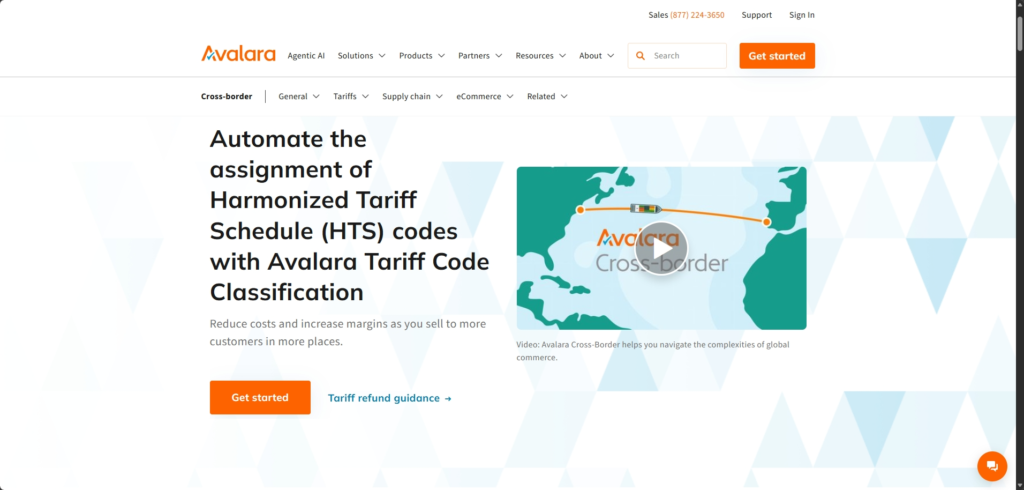
Several platforms now offer AI-powered HS code classification as a core or add-on feature. The right choice depends on your shipment volume, product complexity, and the systems you already use.
| Tool | Best For | Key Feature |
|---|---|---|
| Avalara HS Code Lookup | Mid-to-large importers/exporters | Integrates with ERP systems; multi-jurisdiction codes |
| Descartes CustomsInfo | Customs brokers and 3PLs | AI-assisted classification with human review workflow |
| Zonos Classify | E-commerce and SME exporters | API-driven, scalable for high SKU counts |
| TradeMark SNAP | Operations teams needing batch processing | Bulk classification upload and export |
| WCO Tariff Finder (free) | Individual lookup and verification | Official WCO database; no AI, but authoritative |
A field note from experience: no AI tool replaces a licensed customs broker’s professional liability. In most jurisdictions, the customs declaration remains the legal responsibility of the declarant — which means AI classification is a powerful productivity tool, but the accountability for accuracy stays with the human professional who approves it.
Common Pitfalls & Expert Tips
Pitfall 1 — Using Vague Product Descriptions as AI Input
A common trap we see is operations teams feeding the AI the same minimal product descriptions that appear on purchase orders — brief, internal shorthand that lacks the material, function, and technical detail that classification requires. AI tools are only as accurate as the data you put in. Before deploying any AI classification system, audit your product data and enrich descriptions to include material composition, intended use, and any applicable technical specifications.
Pitfall 2 — Applying One Country’s HS Code Globally
The first six digits of the HS code are internationally standardized, but the national extensions (digits 7–10) differ by country. A code confirmed as correct for EU customs may not match the equivalent code structure in Australia, the US, or Indonesia. Always generate destination-country-specific codes for each shipment. Most enterprise AI tools do this automatically — but many SME-focused tools default to 6-digit codes only. Verify this capability before selecting a tool.
Pitfall 3 — Forgetting That HS Codes Are Updated Periodically
The WCO revises the HS nomenclature every five years (most recently in 2022, with the next update due in 2027). National tariff schedules can change more frequently. In our experience, operations teams that lock a code to a product and never review it are caught out when a product’s classification becomes outdated — triggering compliance issues they did not see coming. Build an annual HS code audit into your compliance calendar, and ensure your AI tool draws from a regularly updated tariff database.
Expert Tip: Link Classification to Your Full Compliance Chain
HS code classification does not operate in isolation. The code feeds your commercial invoice, your proforma, your Certificate of Origin, and your customs declaration. When the HS code is wrong on any one of these documents, the inconsistency can trigger a hold across all of them. For a detailed look at how these documents interlink, see our guide on how to handle export customs delays and holds — it covers the specific document errors that most commonly trigger customs interventions. And for how HS code accuracy connects to your origin documentation, our guide on digital Certificates of Origin in 2026 explains how classification consistency across documents is checked by automated customs systems.
When sourcing products for export, having well-documented goods with clear material specifications makes AI classification substantially more accurate from the start. TheExporter.co offers high-quality handmade and authentic Indonesian furniture with consistent material documentation — which gives operations teams the precise input data that AI classification tools need to perform at their best.
Frequently Asked Questions
1. Can AI classify HS codes accurately for all product types?
AI classification performs best on standard, well-described goods — furniture, textiles, food products, industrial components. It performs less reliably on highly technical or composite products where classification depends on legal interpretation of the General Rules of Interpretation. For those cases, AI serves as a useful starting point, but a licensed customs broker’s judgment is still required to confirm the final code.
2. Is AI-generated HS code classification legally defensible?
The classification itself must be accurate and defensible — not the tool that generated it. If a customs authority challenges a code, what matters is whether the code is correct and whether you have documented the basis for the decision. Using a well-regarded AI tool and maintaining an audit trail of the classification process (including any broker review steps) provides a strong basis for defense. In most jurisdictions, the declarant bears legal responsibility for the code declared, regardless of the tool used to determine it.
3. How much does AI HS code classification cost?
Pricing varies widely. Free tools like the WCO Tariff Finder and many national customs portals offer manual lookup at no cost. Commercial AI platforms typically charge on a subscription or per-classification basis — ranging from a few hundred USD per month for basic platforms to several thousand for enterprise integrations with ERP systems. The ROI calculation is straightforward: if AI prevents a single wrongly-classified shipment from triggering a customs hold or duty dispute, the tool cost is recovered many times over.
4. What confidence threshold should I use for auto-approval?
Based on our research and field experience, 85–90% confidence is the appropriate threshold for most standard product categories. Items below that threshold should be routed for broker review. For high-risk categories — dual-use goods, products subject to anti-dumping duties, or items near classification boundaries — consider raising your threshold to 92–95% to provide a wider safety margin. Calibrate your threshold against your actual misclassification rate over the first 90 days of tool deployment and adjust accordingly.
5. How do I handle products that sit on the boundary between two HS codes?
Boundary cases — products that could plausibly be classified under two different codes — require a formal binding tariff ruling (BTR) from the customs authority in your key destination market. A BTR provides a legally binding classification that protects you from future disputes for a defined period (typically three years). Most major customs authorities, including the EU, US CBP, and Australian Border Force, offer BTR programs. They take time to obtain (typically 60–90 days) but are worth pursuing for high-volume or high-value product lines where the classification has a material impact on duty rates.
Final Word
Understanding how to automate HS code classification with AI is no longer a future capability for leading trade compliance teams — it is a current operational reality. The tools exist, the workflow is proven, and the productivity and accuracy gains are measurable. Customs brokers and operations managers who implement AI classification thoughtfully — with good input data, calibrated confidence thresholds, and human review for complex cases — will process shipments faster, make fewer costly errors, and deliver a more reliable service to their buyers and clients.
Start with an audit of your current product data quality. Then select a tool that integrates with your existing systems and test it against your highest-volume product categories. Build the hybrid workflow — AI for volume, broker for complexity — and measure your misclassification rate before and after. The improvement will be immediate and significant.