Key Takeaways
- Learning how to import clothing from Bangladesh starts with identifying a compliant factory through the Bangladesh Garment Manufacturers and Exporters Association (BGMEA).
- Bangladesh’s ready-made garment (RMG) sector is the world’s second-largest apparel exporter, offering competitive pricing and strong production capacity.
- US buyers pay standard MFN duty rates on most Bangladeshi apparel (typically 12% to 32%), as Bangladesh does not have an FTA with the US.
- Factory compliance on labor standards and social audits is essential for brand risk management.
- Lead times typically run 60 to 120 days from order confirmation to delivery.
For any fashion buyer evaluating global sourcing options, knowing how to import clothing from Bangladesh is a high-value skill. Bangladesh is the world’s second-largest apparel exporter, supplying major global retailers with T-shirts, woven shirts, trousers, knitwear, and outerwear at highly competitive price points. The country’s ready-made garment (RMG) sector employs over 4 million workers and generates more than $40 billion in annual export revenue.
This guide covers the full import process, from selecting a factory to clearing goods through US Customs, so you can source with confidence.

Understanding the Bangladesh Garment Industry
Bangladesh’s garment sector is centered in Dhaka and Chittagong. The industry is dominated by two main factory types: cut, make, and trim (CMT) factories that manufacture to buyer specifications, and full-package (FP) factories that handle fabric sourcing, cutting, sewing, and finishing.
The Bangladesh Garment Manufacturers and Exporters Association (BGMEA) maintains a directory of registered member factories. Cross-referencing a potential supplier against this directory is one of the first due diligence steps every buyer should take.
In our experience, buyers who skip factory verification in favor of lower quoted prices frequently encounter quality issues, delayed shipments, or compliance violations that cost far more than the initial savings.
Step-by-Step: How to Import Clothing from Bangladesh
Step 1: Define Your Product Specifications
Before contacting factories, create a detailed tech pack for each style. A tech pack includes garment measurements and size grading, fabric composition and weight, construction details (stitching, seam allowances, trims), colorways with Pantone references, labeling requirements (care labels, country of origin, size labels), and packaging instructions.
Factories quote more accurately and produce better samples when given complete tech packs. Vague specifications are a leading cause of sample rejection and production delays.
Step 2: Source and Vet Factories
You can find Bangladeshi garment factories through the BGMEA directory, trade platforms such as Alibaba or Fibre2Fashion, sourcing agents based in Dhaka, or trade shows like Textech Bangladesh. Shortlist 3 to 5 factories and request their compliance certifications before requesting a quote.
Key certifications to verify include BSCI (Business Social Compliance Initiative), WRAP (Worldwide Responsible Accredited Production), GOTS (Global Organic Textile Standard) for organic lines, and OEKO-TEX Standard 100 for chemical safety. Also confirm the factory’s building and fire safety compliance, particularly in the post-Rana Plaza environment where buyers are held to a higher standard of due diligence.
Step 3: Request Samples and Negotiate Terms
Request proto samples (initial construction samples), fit samples, and pre-production (PP) samples before approving bulk production. Sample costs and lead times vary, but budget 3 to 6 weeks for each round of sampling.
Negotiate your payment terms carefully. Common structures include 30% deposit on order placement and 70% on bill of lading, or a Letter of Credit (L/C) for larger orders. For new suppliers, starting with smaller trial orders reduces financial exposure while you validate quality and reliability.
Step 4: Confirm Country of Origin and Labeling Requirements
All garments imported into the US must carry a “Made in Bangladesh” label sewn into the garment if the fabric is cut and sewn there. Country of origin rules for textiles and apparel under US Customs are based on the “substantial transformation” test, which for most apparel means the country where the fabric is cut and assembled into a finished garment.
In addition to country of origin, US apparel imports require fiber content labels, care instruction labels (per FTC rules), and RN (Registered Number) or WPL number identification of the US importer or manufacturer. Review the US CBP Textiles and Apparel guidance for current requirements.

Step 5: Classify Your Products and Calculate Duties
Apparel is classified under Chapters 61 (knitted) and 62 (woven) of the Harmonized Tariff Schedule. Duty rates for Bangladeshi apparel entering the US under Most Favored Nation (MFN) status typically range from 12% to 32%, depending on the specific garment type and fiber content.
Unlike many South Asian countries, Bangladesh does not have a bilateral Free Trade Agreement with the US, so there is no preferential duty rate. Factor MFN duties into your cost model from the start. Duty drawback programs may apply if you subsequently re-export finished goods, so consult your customs broker on eligibility.
Step 6: Arrange Shipping and Logistics
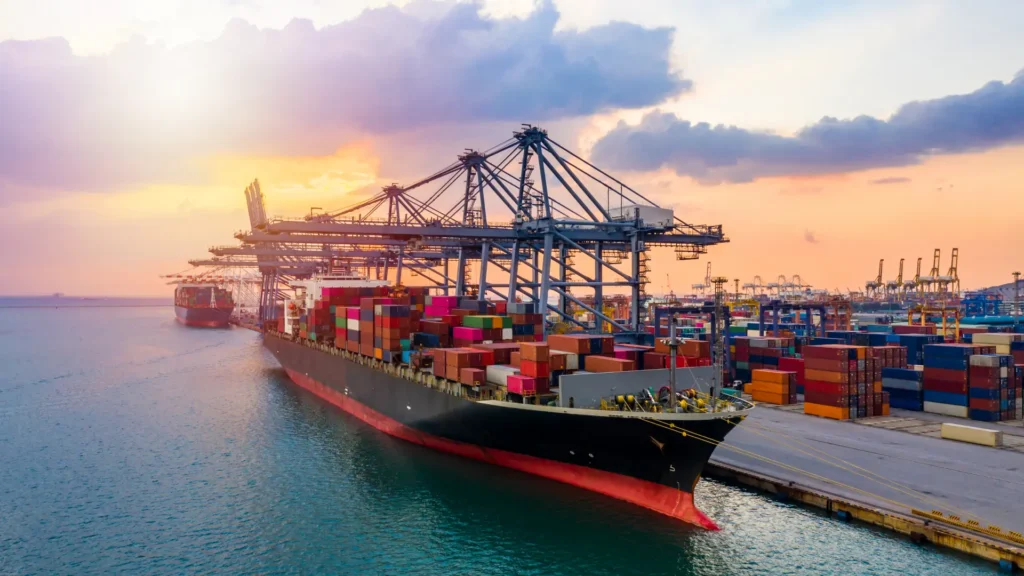
The main port of export for Bangladeshi garments is Chittagong Port. Most US-bound ocean freight transits through transshipment hubs in Singapore, Port Klang (Malaysia), or Colombo (Sri Lanka) before reaching US East or West Coast ports. Transit times from Chittagong to US ports typically run 25 to 35 days for ocean freight.
Engage a freight forwarder with Bangladesh experience who can coordinate factory booking, export customs clearance, consolidation (for LCL shipments), and US import entry filing. Confirm whether your Incoterms are FOB Chittagong or CIF, as this determines who bears freight and insurance costs.
Step 7: Clear US Customs
Your licensed customs broker will file the import entry with CBP. For apparel, CBP frequently examines shipments for country of origin fraud (transshipment through third countries), fiber content mislabeling, and quota compliance where applicable. Ensure your commercial invoice, packing list, and bill of lading are fully consistent before shipment departs.
Common Pitfalls and Expert Tips
Build in buffer time. A common trap we see with fashion buyers new to Bangladesh sourcing is underestimating production lead times. A 90-day production window can easily stretch to 120 days during peak season (October through January). Build this into your buying calendar before committing to retail floor dates.
Do not ignore social compliance. Major US retailers require Supplier Code of Conduct compliance, and third-party social audits (Sedex/SMETA, BSCI) are increasingly a baseline requirement, not a premium. A factory failure on a social audit can derail a sourcing relationship and generate brand exposure.
Conduct pre-shipment inspections. Arrange a third-party pre-shipment inspection (PSI) before the balance payment is released. An inspector on the ground in Dhaka or Chittagong will check quantity, quality, measurements, and labeling against your approved PP sample and purchase order.
Understand the transshipment risk. US CBP actively investigates apparel transshipment, where goods are manufactured in a third country but labeled as Bangladeshi to take advantage of quota or tariff treatment. Ensure your supplier’s entire supply chain, from yarn to fabric to finished garment, is genuinely Bangladeshi to avoid CBP penalties.
For broader context on sourcing from South Asia, see our guide on how to import from Southeast Asia. If your sourcing strategy also includes textile hard goods, our textiles compliance guide covers the documentation and regulatory framework in detail.
Sourcing quality goods from Asia requires reliable partners at every step. At TheExporter.co, we offer authentic, handmade Indonesian goods, including premium furniture and home decor crafted for export to global buyers who value quality and craftsmanship.
Frequently Asked Questions
Is there a minimum order quantity when importing clothing from Bangladesh?
Most Bangladeshi garment factories set minimum order quantities (MOQs) between 300 and 1,200 pieces per style per color. Some larger factories have higher MOQs. If you are a small buyer, look for factories that specialize in smaller runs or consider working through a sourcing agent who can consolidate orders across multiple buyers.
How do I import clothing from Bangladesh to import clothing from Bangladesh without a sourcing agent?
It is possible to source directly without an agent if you have the bandwidth to manage factory communication, sample approvals, quality control, and logistics independently. However, for buyers new to Bangladesh, a local sourcing agent adds value through factory introductions, on-the-ground QC visits, and navigating local business culture.
What duty rate applies to Bangladeshi clothing in the US?
Most Bangladeshi apparel enters the US at MFN duty rates ranging from approximately 12% to 32%, depending on the HS code. There is no US-Bangladesh FTA that provides preferential access. Always confirm the specific duty rate for each HS code before finalizing your cost model.
How long does shipping from Bangladesh to the US take?
Ocean freight from Chittagong to US East Coast ports (New York, Savannah) takes approximately 25 to 30 days. West Coast ports (Los Angeles, Long Beach) take 28 to 35 days. Air freight takes 3 to 5 days but is significantly more expensive and typically reserved for urgent replenishment or small test orders.
What certifications should I require from Bangladeshi garment factories?
At minimum, request BSCI or WRAP social compliance certification and a current building and fire safety inspection report. Depending on your product category and customer requirements, you may also need GOTS (organic), OEKO-TEX (chemical safety), or Bluesign (sustainable manufacturing) certifications. Confirm which certifications your retail partners or end customers require before finalizing supplier selection.