Key Takeaways
- Knowing how to get green trade certification in 2026 gives small business exporters a concrete advantage when selling into sustainability-focused markets like the EU, US, and Japan.
- The most widely recognised certifications for exporters are ISO 14001, FSC, B Corp, and Rainforest Alliance, each serving different product types and markets.
- Green certification directly supports CBAM compliance by helping you document and verify your embedded emissions and production practices for EU buyers.
- Certification is a process, not a one-time event. Most schemes require annual surveillance audits and continuous improvement to maintain your status.
- In our experience, certified exporters close deals faster with European and North American buyers because buyers trust verified credentials over unverified claims.
Sustainability credentials are no longer a bonus feature for exporters. Buyers in Europe and North America are actively filtering their supplier lists based on verified green credentials. And with the EU’s Carbon Border Adjustment Mechanism (CBAM) now in its definitive phase, knowing how to get green trade certification has become one of the most practical steps a small business exporter or compliance officer can take. This guide lays out exactly which certifications matter, who they are for, and how to work through the process step by step.
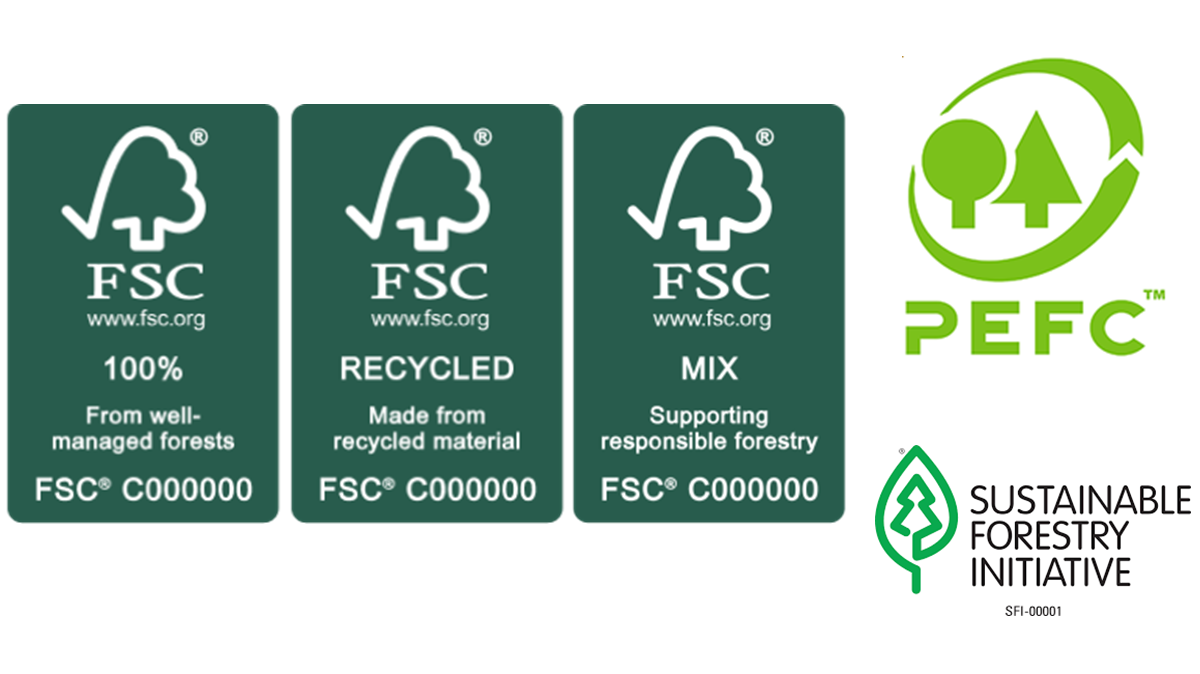
Table of Contents
Understanding Green Trade Certification
Green trade certification is a third-party verified credential that confirms your business, product, or supply chain meets defined environmental and sustainability standards. These certifications are issued by recognised bodies and carry weight with international buyers, government procurement offices, and retail chains who need to demonstrate their own sustainability commitments.
For exporters, they serve two purposes at once: they signal trustworthiness to buyers, and they create an internal discipline of tracking, measuring, and improving environmental performance. That second part is what makes certification valuable far beyond the label itself. Pairing certification with a strong understanding of green logistics practices gives your business a complete sustainability story that buyers can verify end to end.
Why Green Certification Matters for CBAM
The EU’s Carbon Border Tax (CBAM) requires embedded emissions data for covered goods. Exporters who have already pursued certifications like ISO 14001 often find their internal emissions tracking systems are already structured for CBAM data collection. In our experience, companies that start with environmental management certification have a three-to-six-month head start on CBAM data readiness compared to those starting from scratch. If you need a refresher on how CBAM works for non-EU exporters, read our Carbon Border Tax guide for exporters first.
Which Green Certification Is Right for Your Export Business?
There is no single “best” green certification. The right one depends on your product type, target market, and the buyer relationships you are building. Here is a comparison of the four most relevant certifications for exporters in 2026.
| Certification | Best For | Key Markets | Complexity | Typical Timeline |
|---|---|---|---|---|
| ISO 14001 | Any sector, any product type | Global (EU, US, Japan) | High | 6–18 months |
| FSC Chain of Custody | Wood, paper, furniture, packaging | EU, North America, Australia | Medium | 3–6 months |
| B Corp | Whole-company sustainability | EU, US, UK | High | 12–24 months |
| Rainforest Alliance | Agricultural products, cocoa, tea, timber | EU, US | Medium | 3–9 months |
ISO 14001: The Standard for Environmental Management
ISO 14001 is the globally recognised framework for Environmental Management Systems (EMS). It applies to any organisation, any size, any sector. The certification does not prescribe specific performance targets, but requires you to establish a systematic approach to identifying your environmental impacts, setting measurable objectives, and continuously improving your performance.
More than 500,000 organisations worldwide hold ISO 14001 certification. Many large EU buyers and government procurement offices require it from suppliers. Achieving it signals to buyers that your environmental claims are backed by an audited system, not just marketing language. Annual surveillance audits and a full recertification every three years maintain your status.
FSC Certification: For Wood, Furniture, and Packaging Exporters
For exporters in the wood, furniture, paper, and packaging sectors, FSC (Forest Stewardship Council) certification is the most directly relevant green credential. The FSC Chain of Custody certification tracks certified material from the forest through the entire supply chain to the final product. There are three primary FSC labels: FSC 100%, FSC Recycled, and FSC Mix, each communicating a different level of certified content.
A common trap we see is exporters assuming FSC Mix carries the same weight as FSC 100% with buyers. It does not. If your target buyer is a premium retailer or a European furniture chain, understand exactly which label they require before starting the certification process. FSC-certified products consistently command a price premium and are preferred by major retail buyers across the EU and North America.
B Corp: Whole-Company Sustainability Credibility
B Corp certification, awarded by B Lab, assesses a company across five areas: Governance, Workers, Community, Environment, and Customers. From 2026, B Lab has moved to updated standards with stronger minimum requirements across each impact area. Historically, companies needed a verified B Impact Assessment score of 80 or higher. The updated framework makes this more rigorous, but also more credible.
B Corp is the most comprehensive credential on this list, but also the most resource-intensive. It works best for export businesses that want to lead on whole-company sustainability rather than just a product-level claim. If your brand story and market positioning centre on ethical trade, B Corp is worth the investment.

How to Get Green Trade Certification: The Step-by-Step Process
Step 1: Identify Which Certification Your Buyers Require
Start with your buyers, not with the certification bodies. Ask your existing and target EU or US buyers directly: what green credentials do they require from suppliers? Different buyers have different requirements. A furniture retailer may require FSC. A corporate buyer with sustainability procurement targets may want ISO 14001. A food and beverage importer may look for Rainforest Alliance. Knowing the answer before you start saves significant time and money. Our guide to verifying and understanding international buyers can help you structure those conversations effectively.
Step 2: Conduct a Gap Analysis
Once you have chosen a certification target, assess where your current operations stand against the standard’s requirements. For ISO 14001, this means reviewing your existing environmental practices, documentation, and monitoring systems. For FSC, it means auditing your timber sourcing, documentation chains, and supplier records. In our experience, most SME exporters find they are 40 to 60 percent of the way to certification before they have formally started, because good operational discipline already covers much of what auditors look for.
Step 3: Engage an Accredited Certification Body
Every major green trade certification requires assessment by an accredited third-party body. For ISO 14001, look for bodies accredited by your national accreditation authority or IAF-recognised bodies. For FSC, use an FSC-accredited certification body from the official FSC directory. Obtaining quotes from at least three bodies is standard practice. Costs vary significantly by geography, organisation size, and the complexity of your operations.
Step 4: Implement Required Systems and Documentation
This is where the real work happens. For ISO 14001, you will need a documented Environmental Management System, an environmental policy, objectives and targets, internal audit procedures, and records of performance monitoring. For FSC Chain of Custody, you need documented procedures for how certified material is received, stored, processed, and labelled at every point in your operation. Build these systems gradually, with clear ownership assigned to a specific compliance officer or manager. Linking this to your broader export carbon footprint tracking creates a unified sustainability data pipeline.
Step 5: Undergo the Initial Certification Audit
Most certifications involve a two-stage audit process. Stage one is a documentation review, where the auditor checks that your systems, policies, and procedures meet the standard. Stage two is an on-site audit where your actual operations are observed against your documented systems. Gaps identified at stage one should be corrected before stage two. In our experience, companies that treat the gap analysis phase seriously rarely fail at stage two.
Step 6: Maintain and Leverage Your Certification
Certification is not the finish line. Surveillance audits, continuous improvement records, and staff training are ongoing requirements. The exporters who get the most value from certification are those who actively communicate it to buyers, include it in their export documentation, and reference it during pricing negotiations. A certification that sits in a drawer helps no one. Use it on your company profile, include it in your proforma invoices and buyer proposals, and make it visible to every potential customer.
Common Pitfalls & Expert Tips
Pitfall 1: Choosing a Certification No One in Your Target Market Recognises
A common trap we see is SMEs pursuing local or regional green awards that carry no weight with international buyers. Always verify that your target buyers, in your target export markets, recognise and value the specific certification you are pursuing before committing budget and time.
Pitfall 2: Treating Certification as a Compliance Checkbox
Getting certified without actually improving your environmental performance undermines the value of the credential. Buyers and auditors can tell the difference between a business that has built genuine sustainability practices and one that has built paperwork. The best certifications strengthen your operations first, and your market position second.
Expert Tip: Stack Certifications Where They Overlap
Several certifications share common data requirements. If you are pursuing ISO 14001, much of the environmental performance data you collect will also support your B Impact Assessment if you later choose to pursue B Corp. In our experience, the most export-competitive SMEs build their sustainability systems to serve multiple certifications simultaneously rather than sequencing them one by one. Plan for where you want to be in three years, not just what you need for the next buyer meeting.
FAQ: Green Trade Certification for Exporters
How long does it take to get green trade certified?
Timeline varies by certification. FSC Chain of Custody typically takes three to six months if your supply chain documentation is already structured. ISO 14001 typically takes six to eighteen months, depending on the size and complexity of your operations. B Corp takes twelve to twenty-four months for most SMEs going through the process for the first time.
How much does green trade certification cost?
Costs depend on the certification type, your organisation’s size, and the certification body you use. FSC Chain of Custody certification can range from a few hundred to a few thousand US dollars annually. ISO 14001 certification, including consultancy and audit fees, typically runs between USD 5,000 and USD 30,000 for SMEs. B Corp has an annual certification fee scaled to your company’s revenue. Always get multiple quotes before committing.
Does green certification reduce my CBAM exposure?
Directly, no. CBAM certificate requirements are calculated on embedded carbon emissions, not on green credentials. However, pursuing ISO 14001 builds exactly the kind of environmental data systems that make CBAM emissions reporting far easier. Indirectly, certified exporters often have lower embedded emissions because the certification process drives operational improvements, which can reduce their EU buyers’ CBAM certificate costs.
Can a small business afford green certification?
Yes, particularly for FSC and Rainforest Alliance, which have SME-friendly fee structures. B Corp also scales fees by revenue. ISO 14001 is the most resource-intensive, but government trade promotion agencies in many countries offer grants or subsidised consultancy for SMEs pursuing environmental management certifications. Check with your national trade promotion authority before budgeting from your own funds alone.
Which certification should furniture exporters get?
FSC Chain of Custody is the most market-relevant certification for furniture exporters selling into the EU and North America. Many large furniture retailers and interior design buyers require FSC-certified sourcing as a baseline condition. If you are exporting handcrafted or artisan furniture from Asia to premium European markets, FSC certification alongside a clear provenance story is a powerful commercial combination.
Looking for Export-Ready Products?
Sustainability credentials matter most when the product itself has genuine quality and heritage behind it. TheExporter.co offers a curated range of high-quality, handmade Indonesian goods, including authentic furniture crafted with care and ready to be exported to international buyers. If you are sourcing distinctive, sustainable goods for the European or global market, explore our full catalogue below.